2005
The first kitchen.
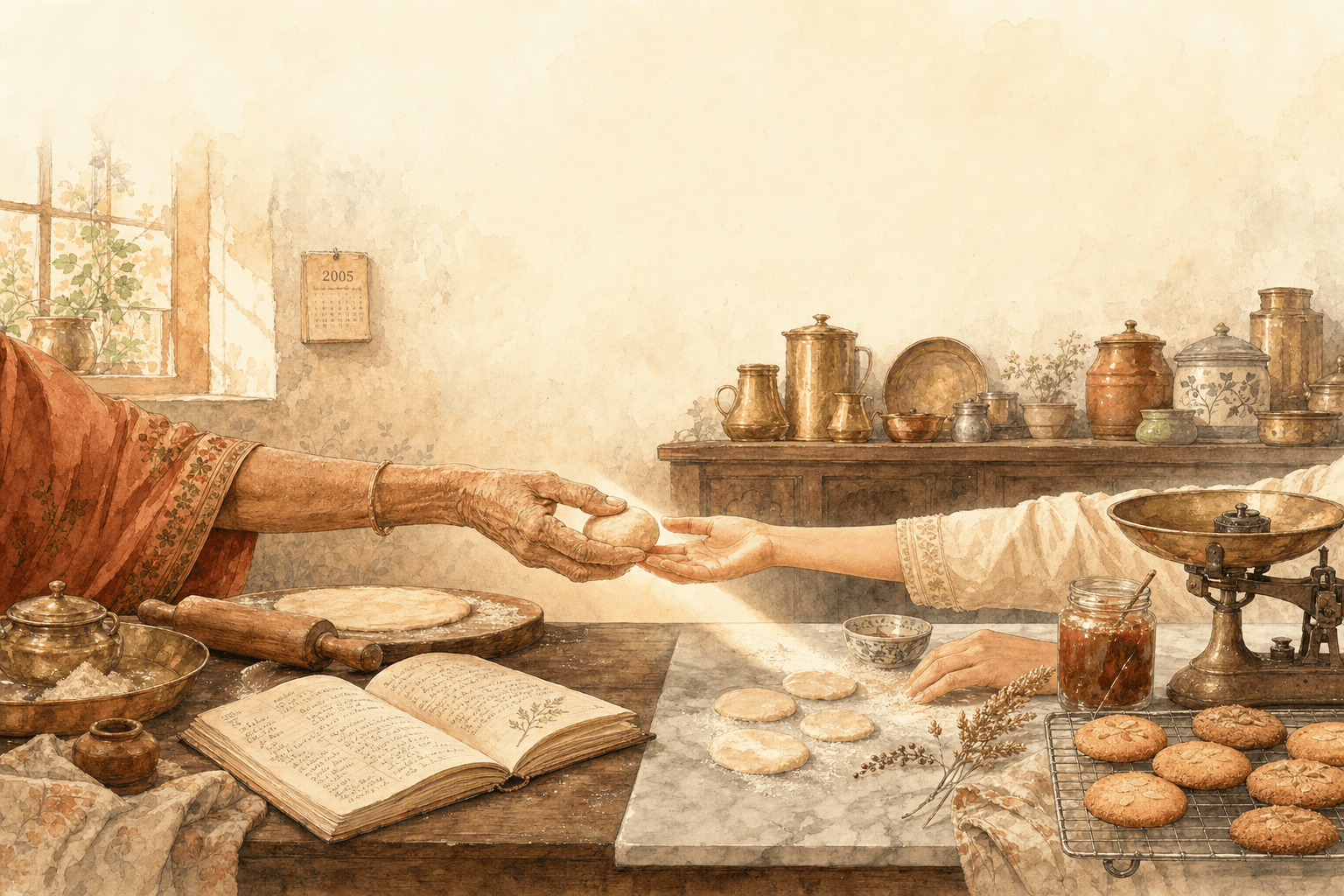
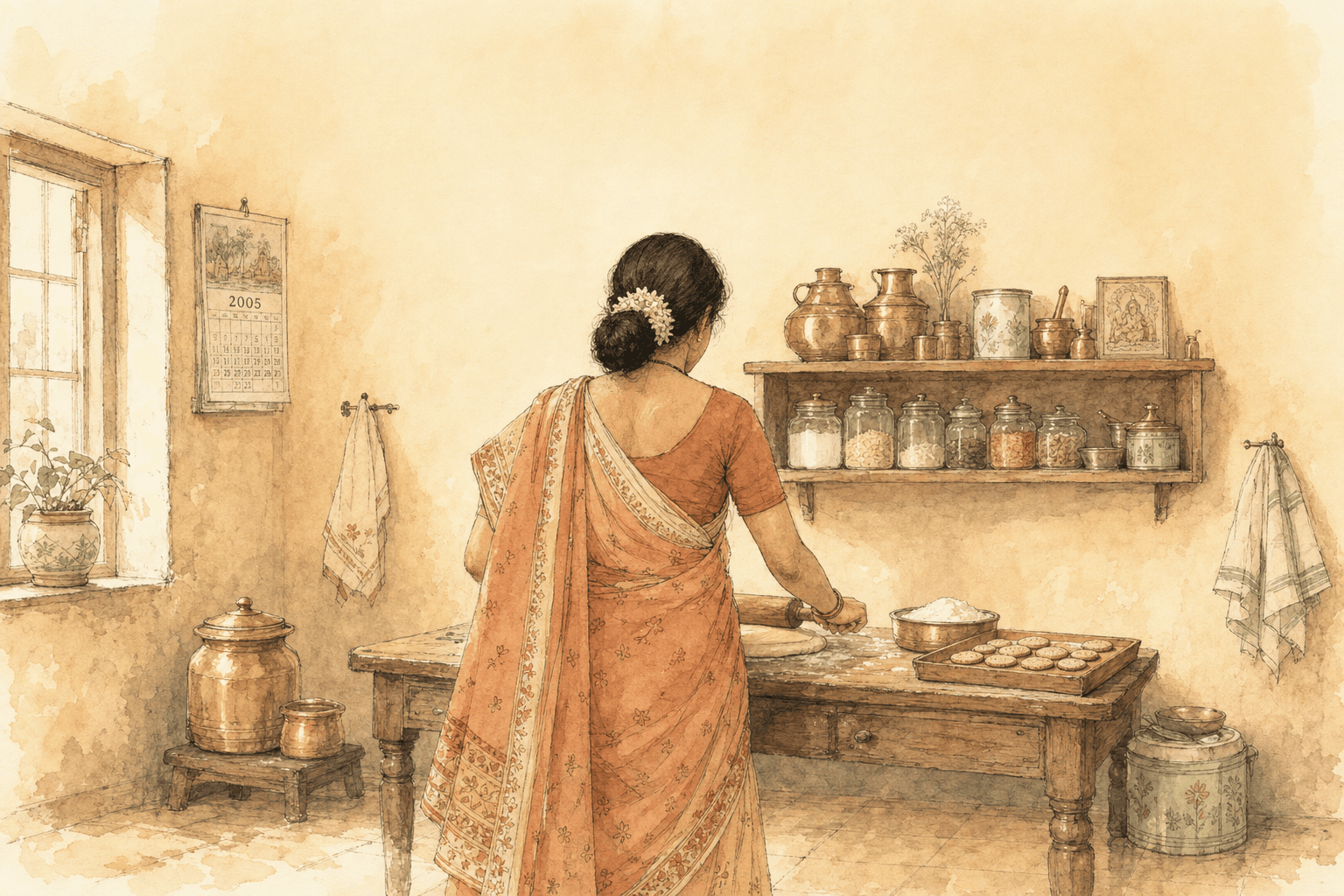
The first class was four students around a wooden table. The recipes belonged to Meenu's mother and grandmother — whole-wheat tea cakes, ghee-rich biscuits, jaggery loaves — and the kitchen smelled, faintly, the way her own childhood had smelled.
There was no signage, no plan, no commercial intent. The students paid in attention, and went home with a tin of what they had made.
2008
The recipes leave the home.
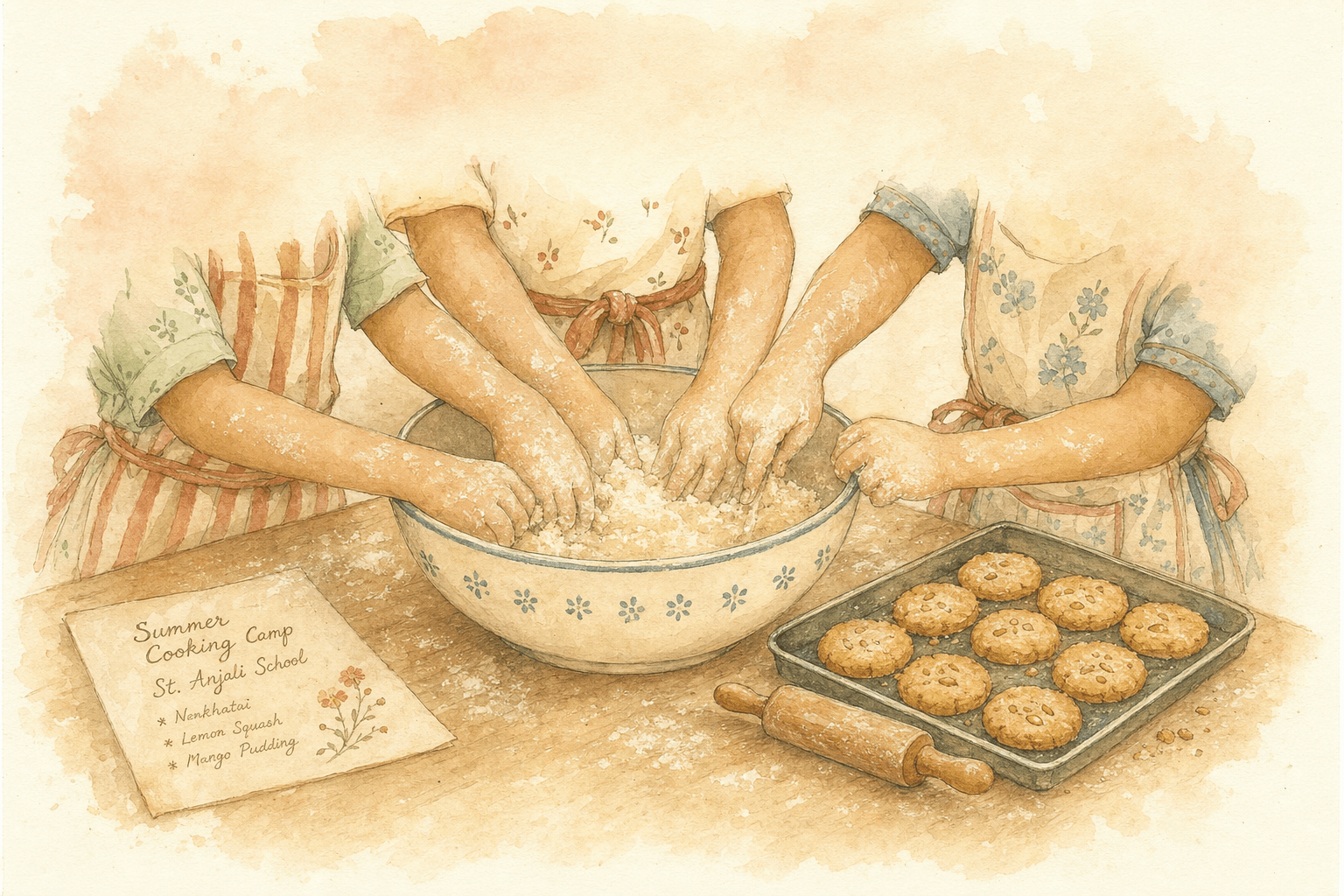
By the third year, the local schools began asking. Meenu started running short summer camps for children — small groups in borrowed school kitchens, learning, gently, that atta is not the enemy of cake.
A few hundred children, over a few summers, met whole-grain baking before they ever met the supermarket version.
2012
A teaching counter.
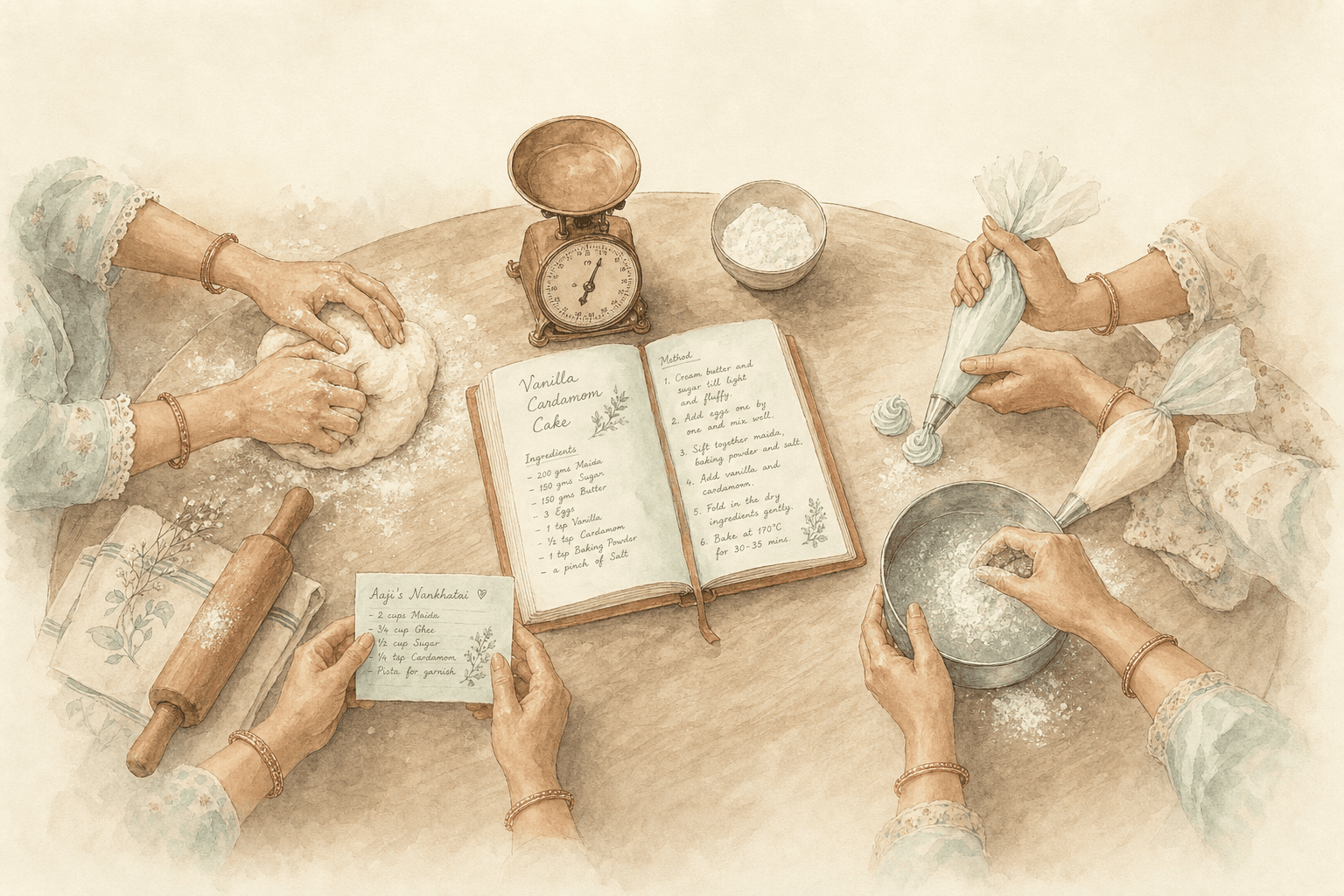
Word travelled. Mothers came, then daughters, then daughters' friends. The dining table at home became a teaching counter, the open recipe book pulled across it like a sheet of music.
The classes lengthened, and the curriculum grew with them — celebration cakes, festive hampers, every-day cookies — all built on the same simple grammar of whole grains, honest ingredients, and slow, careful baking.
2018
A thousand students. Fifty kitchens.
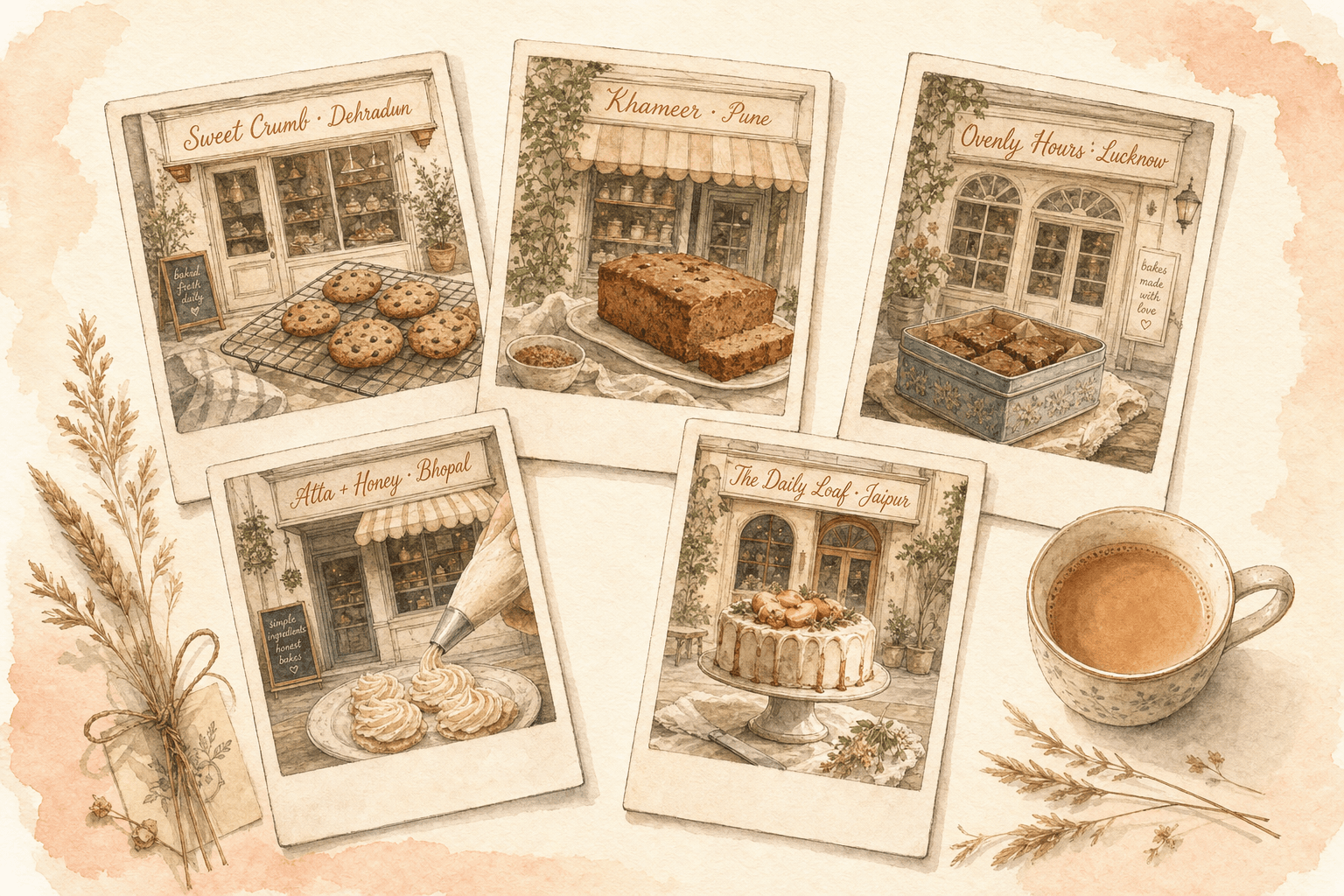
Over the years, more than a thousand students passed through the kitchen. More than fifty of them have since opened their own home bakeries — in Dehradun, in Pune, in Lucknow, in towns that don't always make the map.
Each of them began at the same table, with the same rolling pin.
2022
The hills.
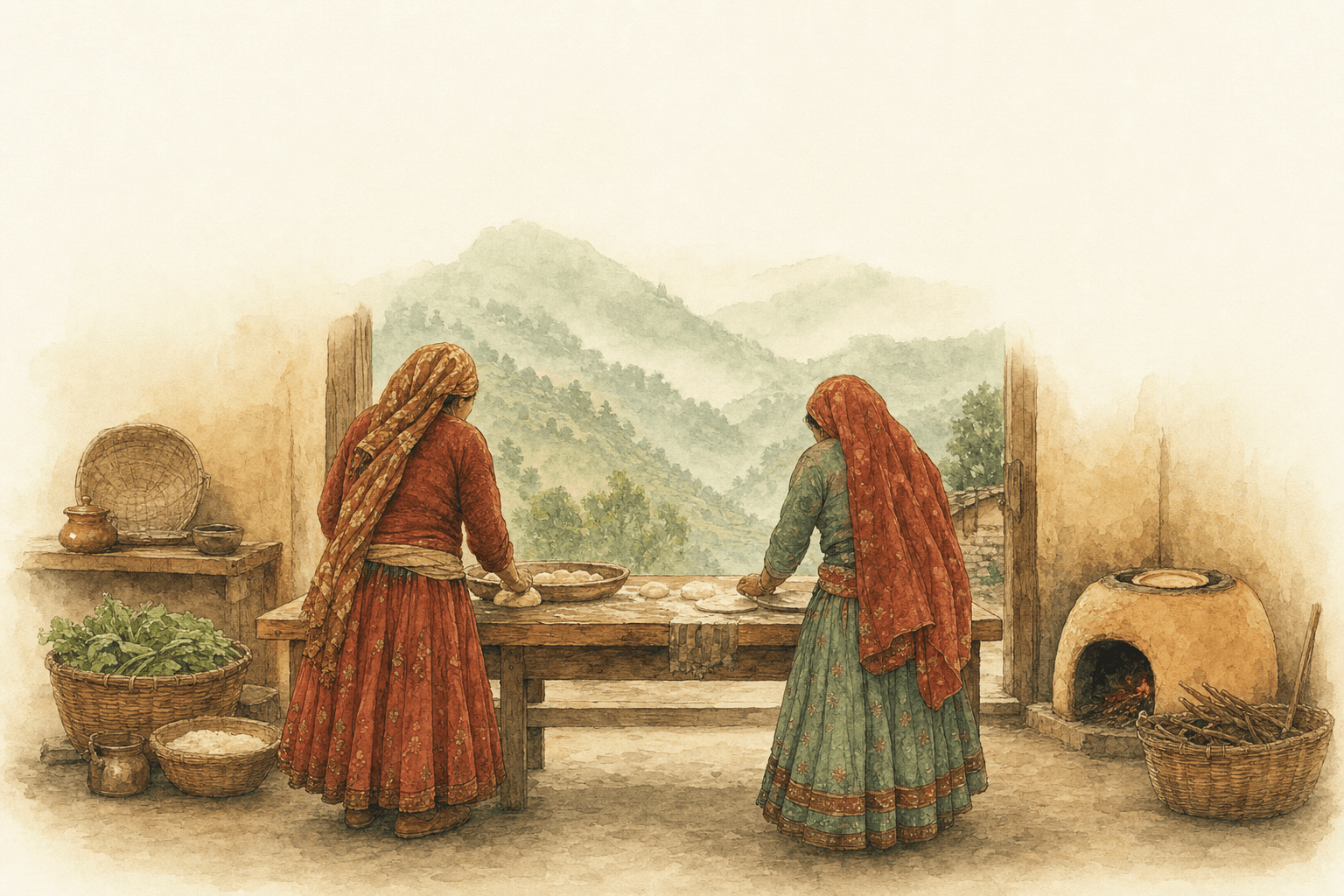
In 2022, a partnership with a state skill-development programme took the recipes into the hills. Meenu began teaching groups of Adivasi women — not as a programme to be completed, but as a craft to keep.
The classes were quieter. The kitchens were smaller. The language was, often, unshared. But the rolling pin worked the same. Several of the women have since become the primary earners in their households.
“It is the bake the kitchen is most quietly proud of.”
2025
The Heirloom Oven.
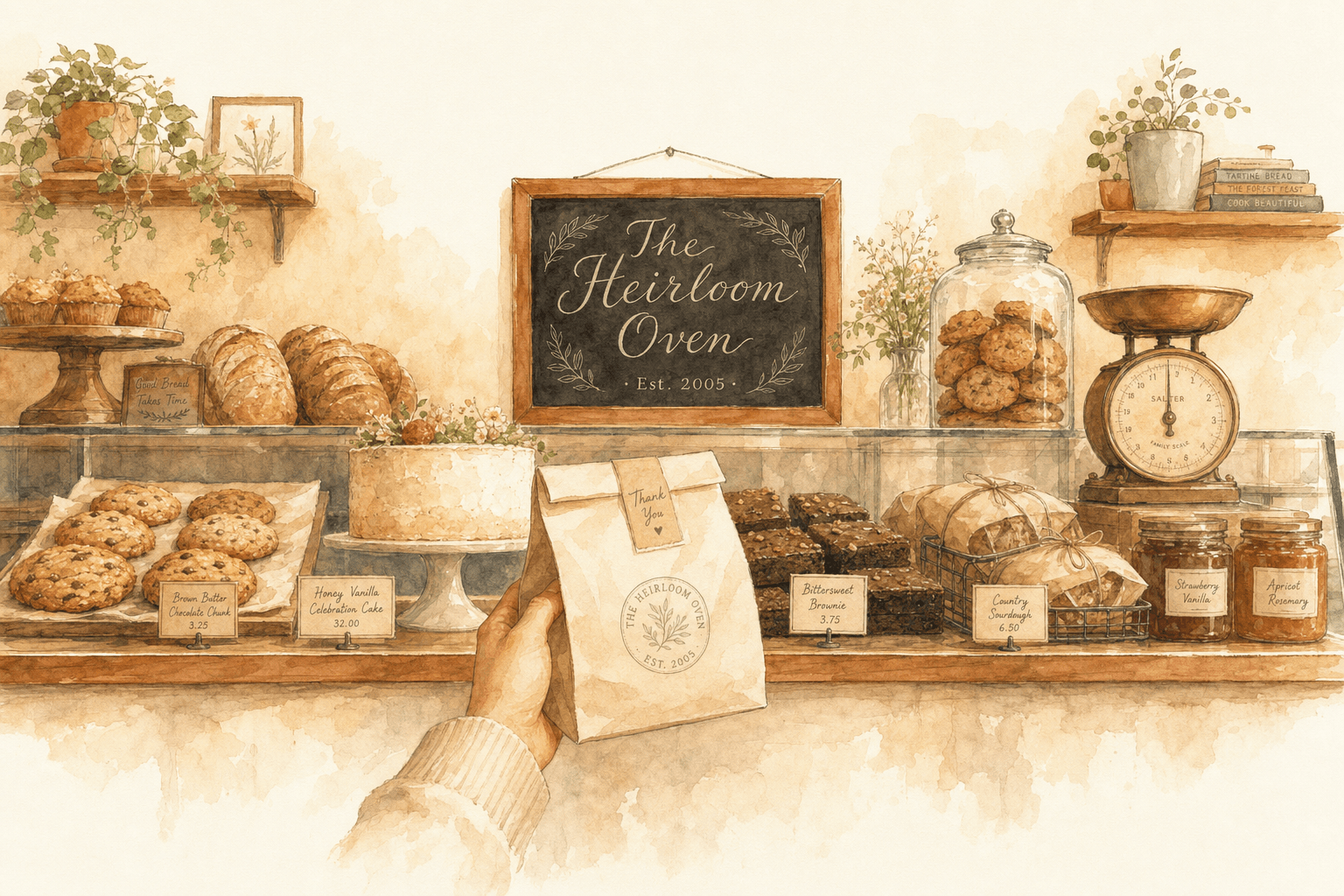
Twenty years on, the teacher stepped to the other side of the counter. The Heirloom Oven opened in 2025 — small-batch, retail and online, every recipe road-tested through years of teaching.
The kitchen stayed where it was. Only the address changed.